
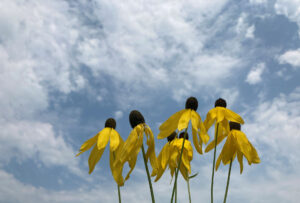
Why Some Native Plants Take Two Years to Germinate
If you’ve seeded native plants and nothing grows the first spring, the seed may not have failed. Some species exhibit double dormancy, a natural germination strategy that can delay emergence until the second growing season.
Whether you’re a homeowner establishing a prairie garden, a contractor installing a pollinator planting, or a project manager overseeing a restoration project — understanding double dormancy helps set realistic expectations for seed establishment.
What Is Double Dormancy?
Double dormancy means a seed requires two seasonal cycles before it will fully germinate. Instead of sprouting after a single winter, these seeds must experience a sequence of environmental cues:
- Warm, moist conditions that allow the embryo to develop
- Cold, moist stratification that breaks physiological dormancy
Because of this process, seeds often remain underground through the first growing season, germinating the second spring after planting.
This strategy helps plants avoid germinating during short warm periods in fall, when seedlings would likely die during winter.
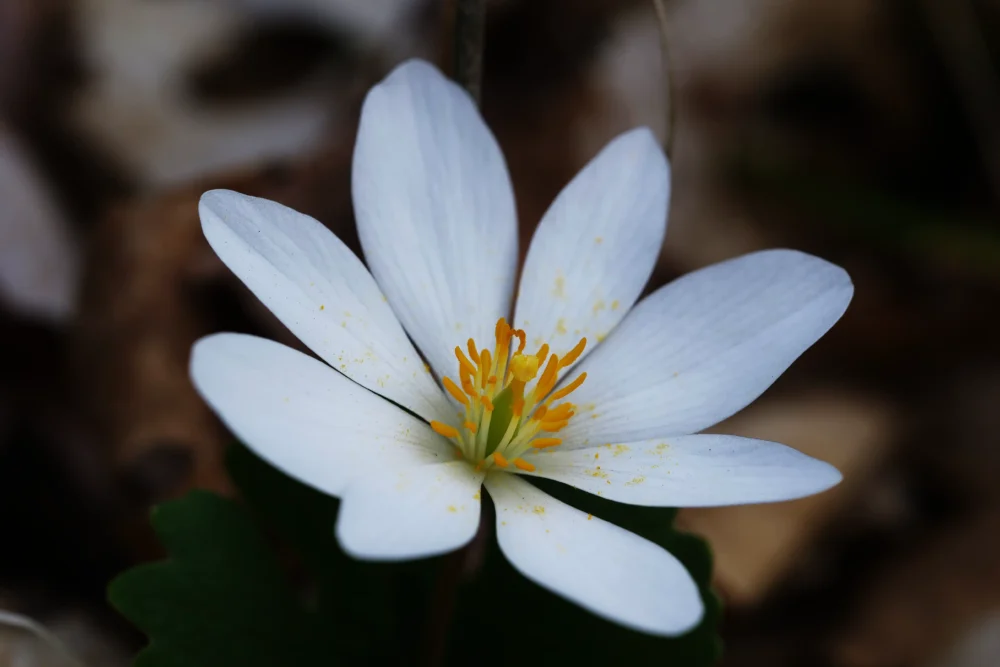
*Bloodroot pictured
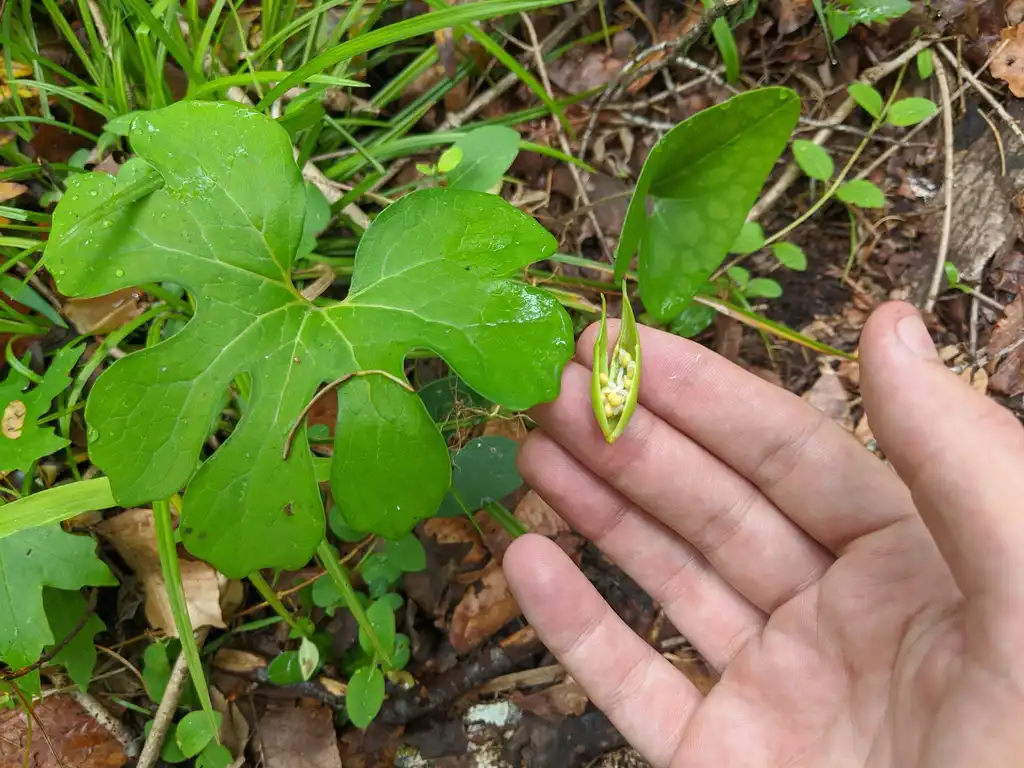
Native Plants That Exhibit Double Dormancy
Double dormancy is most common in woodland wildflowers and shade-adapted species rather than open prairie plants.
Some Midwest ephemeral species known for delayed germination include:
- Bloodroot (Sanguinaria canadensis)
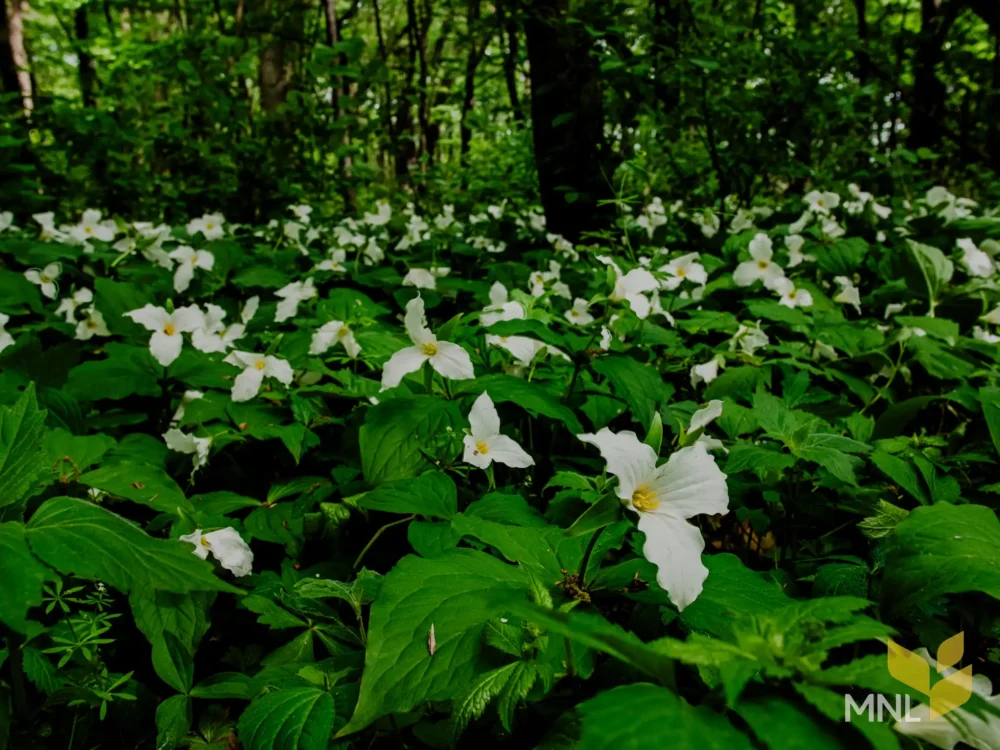
- Trillium species (Trillium spp.) *pictured here
- Blue cohosh (Caulophyllum thalictroides)
- Jack-in-the-pulpit (Arisaema triphyllum)
- Wild ginger (Asarum canadense)
If you’re looking to establish these woodland species, we offer a selection of native spring ephemerals ready for planting this season.
[Shop Spring Ephemeral Species →]
In some cases, these seeds first produce a root in the initial season, with the shoot emerging the following year.
For restoration professionals and landscapers installing woodland plantings, this means germination may not occur in the first season, and clients may need to be educated on this process so they are aware it could take two or even three seasons for germination conditions to occur.
Why Prairie Plants Usually Don’t Have Double Dormancy
For prairie plant enthusiasts, don’t worry! Most prairie grasses and forbs do not exhibit double dormancy. Instead, they typically require only one winter of cold stratification to germinate. Prairie ecosystems favor faster germination because plants must quickly take advantage of open sunlight, seasonal rainfall, and competition with grasses. They are also not as prone to seasonal variability as woodland species thanks to sunlight exposure.
What This Means When Seeding Native Plants
If you’re establishing a native planting in the Midwest:
- Don’t assume seeds have failed if nothing appears the first year, even with prairie species.
- Woodland species may require two seasonal cycles to germinate. This is by nature’s design!
- Prairie seed mixes typically establish within the first growing season after winter. Spring is a great time to seed a project, but you may not see full germination until the following year when the seeds have been through months of winter temperatures and freeze-thaw conditions.
Understanding double dormancy helps ensure realistic timelines and better project planning. If you’re working with woodland native seeds, especially ephemeral species, patience is a big part of the process. Some of the most rewarding native plants simply take a little longer to appear.
What is double dormancy in seeds?
Double dormancy is when seeds require both warm and cold cycles before germinating.
How long do native seeds take to germinate?
Some native seeds germinate the first spring, while others with double dormancy may take two seasons.
Related posts:
Leave a Reply